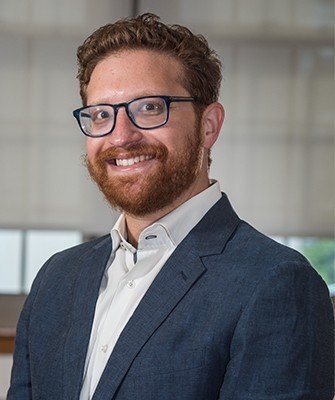
Rawley Z. Heimer
Associate Professor of Finance
W. P. Carey School of Business, Arizona State University
About
Professor Rawley Heimer is an expert in financial markets whose research examines how households build and lose financial security through their decisions in investment and credit markets. His research shows how social networks shape investor behavior, how leverage drives retail investors’ trading and affects financial markets, and how mistaken beliefs distort saving and investment over the life cycle. Current work examines how AI affects personal finances. He also studies real estate markets, including mortgage lending and institutional investment in housing.
His research is published in leading finance and economics journals and has received numerous awards, including the Dimensional Fund Advisors Distinguished Paper Award at the Journal of Finance and the Rising Scholar Award at the Review of Financial Studies. This research has been featured in Bloomberg News, the Financial Times, Forbes, and the Wall Street Journal, among others.
Prof. Heimer is an Associate Editor at Management Science, the Review of Corporate Financial Studies, and Financial Management. Outside of academia, he was formerly an economist at the Federal Reserve Bank and served as Senior Advisor for Research and Policy at the Consumer Financial Protection Bureau. He frequently gives presentations to asset managers and supports litigation in areas such as consumer banking, financial markets, and digital assets.
Research by topic
Retail investing and brokerage7 papers
How individual investors behave in financial markets, why they so often trade against their own interests, and how leverage limits, brokerage practices, and social networks change their outcomes.
Consumer credit and debt8 papers
How households get, use, and repay credit, and how early-life conditions, cash windfalls, regulation, and politics shape credit outcomes, studied mostly with individual credit bureau records.
Mortgage lending and housing5 papers
Who gets mortgage credit and on what terms, including tests for disparate treatment in lending, the politics of fair-lending enforcement, and the role of institutional investors in single-family housing.
Consumer protection and financial regulation7 papers
How regulation, supervision, and politics affect people who use financial services, from leverage limits for retail traders and age limits on credit cards to complaint resolution at the Consumer Financial Protection Bureau.
Saving, retirement, and inheritance7 papers
How people accumulate, spend down, and pass on wealth over their lives: saving for retirement, beliefs about longevity, bequests and inheritances, private family foundations, and the effects of wealth shocks.
Behavioral finance and beliefs9 papers
Why people’s financial choices depart from what standard models predict: biased beliefs about risk and longevity, plans that change once outcomes arrive, social influence among investors, and how generative AI may change financial decisions.
Legal institutions and financial development3 papers
How courts and contract enforcement shape credit markets and long-run economic development, studied through the assignment of state versus tribal courts on Native American reservations.
Selected publications
-
Dynamic Inconsistency in Risky Choice: Evidence from the Lab and Field
-
Biased by Choice: How Financial Constraints Can Reduce Financial Mistakes
RFS Rising Scholar Award.
-
YOLO: Mortality Beliefs and Household Finance Puzzles
Dimensional Fund Advisors Distinguished Paper Award. TIAA Paul A. Samuelson Award Finalist.
-
Should Retail Investors’ Leverage Be Limited?
Lead article. Best Paper Finalist in Asset Pricing, SFS Cavalcade.
-
Financial Times list of business school research with social impact. TIAA Paul A. Samuelson Award Finalist.
-
Law and Finance Matter: Lessons from Externally Imposed Courts
Best Paper in Financial Markets and Institutions, FMA Annual Meeting.
-
Peer Pressure: Social Interaction and the Disposition Effect
Working papers
-
Temporal Focal Points and Economic Outcomes: Evidence from U.S. Mortgage Lending
-
Pushing Boundaries: Political Redistricting and Consumer Credit
-
The Wealth Draw-down of the Fabulously Rich: Insights from Private Family Foundations
-
Brokerage Commissions and Trading Volume: Lessons from the 20th Century
Positions and affiliations
- Associate Professor of Finance, W. P. Carey School of Business, Arizona State University2022–
- Associate Editor, Management Science2025–
- Associate Editor, Review of Corporate Financial Studies2022–
- Associate Editor, Financial Management2022–
- Visiting Scholar, Federal Reserve Bank of Philadelphia2024–
- Affiliated Faculty, W. P. Carey Center for Real Estate and Finance2024–
- Affiliate, The Bureau Consulting Group2025–
- Senior Advisor for Research and Policy, Consumer Financial Protection Bureau2022–2025
- Assistant Professor of Finance, Boston College2017–2022
- Research Economist, Federal Reserve Bank of Cleveland2013–2017
Education
- Ph.D., International Economics and Finance, Brandeis University2013
- B.A., Economics, University of Rochester2005
In the media
- Wall Street Journal: How to Make Peace With Your Stock Market Losses
- Bloomberg: Brokers Flock to Paradise of Sun, Sand and ‘Unlimited’ Leverage
- PBS NewsHour: How Growing Up in a Bank Desert Can Hurt Your Credit for Life
- Børsen: Tech Darling Lost Billions on AI Stocks